

What if the most meaningful signs of getting stronger aren’t the numbers you see at the gym, but the things you can do outside it?
“What if the most important sign that you’re getting stronger has nothing to do with how much weight you lift?”
Maybe it’s walking up the stairs without thinking twice. Carrying groceries in one trip. Or getting down on the floor to play with your grandchildren and feeling more confident about standing back up.
Those moments might not appear on a fitness tracker, but they can tell you something important about your progress.
For adults over 50, fitness goals after 50 don’t have to revolve around numbers. They can reflect the everyday activities you want to keep enjoying.
Why Don’t Traditional Fitness Numbers Tell the Whole Story?
When people talk about fitness progress, they often mention familiar measurements.
How much weight did you lift? How many repetitions did you complete? How many calories did you burn?
Those numbers can provide useful information.
For example, gradually lifting heavier weights with good control may show that you’re developing strength.
But numbers don’t always explain why that strength matters to you.
Someone might improve their performance at the gym while overlooking a change that’s more meaningful in everyday life.
Perhaps carrying a suitcase feels easier. Maybe standing up from a low chair requires less effort.
Those improvements deserve attention too.
The CDC’s physical activity guidance for older adults highlights the importance of strength, balance, and regular activity in supporting health and physical function as people age.
The goal isn’t simply to become better at exercising.
It’s to support the activities you want to keep doing.
What If Your Fitness Scoreboard Reflected Your Actual Life?
Imagine creating a fitness scoreboard that had nothing to do with comparing yourself to someone else.
Instead, it measured the things that matter most to you.
Someone who enjoys traveling might focus on walking comfortably through airports and managing luggage.
Someone who loves gardening might want to feel more capable bending, carrying, and getting up from the ground.
Another person might simply want to continue managing everyday activities independently.
There’s no single correct scoreboard.
The most useful one reflects your priorities.
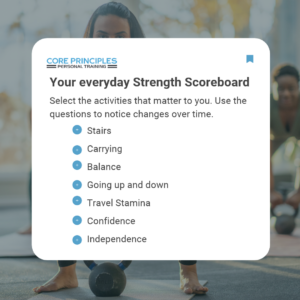
You don’t need to improve in every category at once.
Choose the areas that matter most and pay attention to how they change.
How Can You Notice Progress That Isn’t Obvious?
Everyday progress often happens gradually.
You might not notice that you’re using the stair railing less often until one day you realize you’ve been climbing stairs more comfortably.
Or perhaps you carry a few extra grocery bags without needing to stop.
One useful approach is to check in with yourself every few weeks.
Ask whether familiar activities feel different, whether you need less support, or whether you’re more willing to try something you previously avoided.
Compare your experiences with your own starting point, not someone else’s achievements.
And remember that progress isn’t always perfectly consistent.
Some weeks you’ll feel stronger. Other weeks, you may feel tired or need additional recovery.
That’s part of maintaining a realistic long-term routine.
How Does Strength Training Connect to Everyday Activities?
Many exercises performed in a gym resemble movements used in daily life.
A step-up practices leg strength and control relevant to stairs and curbs.
Carrying weights develops strength used when handling groceries or luggage.
Sit-to-stands practice a movement used whenever you get out of a chair or car.
Rows develop pulling strength, while balance exercises can help people practice stability and coordination.
These connections don’t mean one exercise automatically guarantees improvement in a particular activity.
But a thoughtful strength training program can help develop physical abilities that support everyday movement.
Core Principles member Leslie W. described this idea particularly well.
A lifelong recreational tennis player who had experienced several injuries, Leslie explained that her most important goal was being strong and healthy enough to continue doing the activities she enjoys, whether that’s tennis, hiking, or everyday life.
Her perspective captures what a personal fitness scoreboard can represent.
Strength isn’t only about what you can lift. It’s also about what you want to keep doing.
What Would You Put on Your Own Scoreboard?
Think about three activities that matter to you.
Maybe it’s walking around Stamford without getting tired as quickly, carrying your own luggage, or feeling confident playing with your grandchildren.
Now ask yourself:
What would you like to keep doing five or ten years from now?
What activity would you like to feel more comfortable doing?
What small improvement would make everyday life better?
What this means for you: Your fitness goals don’t have to match someone else’s. Meaningful progress can be measured by how your strength supports the life you want.
Build Strength for the Life You Want to Live
For 12 years, Core Principles Personal Training has helped Stamford adults 50+ work toward meaningful strength goals through individualized coaching and small groups of no more than six.
Whether you’re starting for the first time or returning after a break, your goals deserve attention.
And those goals don’t need to involve a number on a scale or a record at the gym.
They can be as simple as wanting to keep doing the things you love.
Want help turning your everyday goals into a strength training plan?
Stamford: Reply START to learn about our 14-Day “New to Strength Training” Trial.
Norwalk: Visit our Founding Members page to learn about the 28-Day Forever Strong Kickstart and opening updates.
Reach out to Core Principles Personal Training. We’d be happy to discuss what matters most to you and how strength training might help you work toward it.
And here’s a question worth considering: If you could choose just one thing to put on your personal strength scoreboard, what would it be?