Mobility-to-strength programming in Stamford workout classes blends targeted joint mobility, functional movement, and progressive resistance to help people move more freely and remain independent. This article explains the mobility and strength training continuum, why integrating both improves joint health and daily function, and what measurable progress you can expect from regular participation in local classes and personal training.
Many readers seek practical, evidence-based guidance—especially older adults—so the piece outlines class types, typical session structure, senior-friendly adaptations, and realistic timelines for mobility and strength gains. You will find clear definitions, sample exercises, comparison tables to choose the right class format, and tracking metrics to monitor improvement. Read on to learn which class formats combine mobility and strength, how programs support active aging, and what a typical Stamford class looks like from warm-up through progressive strength work.
What Are Mobility and Strength Training in Stamford Workout Classes?
Mobility training focuses on improving joint range of motion, neuromuscular control, and movement quality, while strength training builds muscle force and resilience through progressive resistance; together they reduce pain and improve function.
Mobility targets the quality of movement—how joints move through safe ranges—whereas strength addresses the capacity to perform tasks like rising from a chair or carrying groceries.
Integrating both reduces fall risk, supports bone health, and enhances independence across daily activities. Recent studies and professional guidelines emphasize that mobility work primes nervous system patterns, making resistance training more effective and safer for older adults. The next section breaks down how mobility drills mechanically improve joints and how targeted strength work translates to functional benefits.
How Does Mobility Training Improve Joint Health and Flexibility?
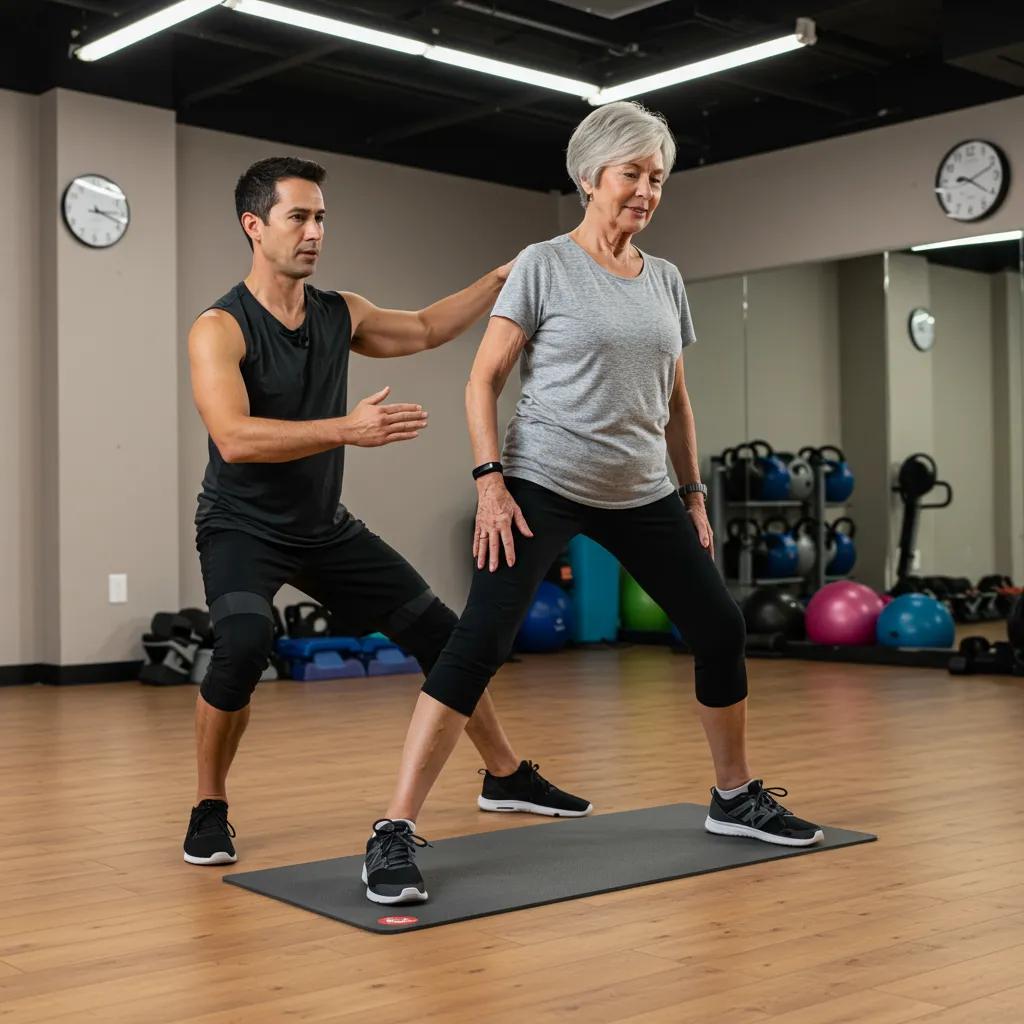
Mobility training improves joint health by increasing range of motion, enhancing synovial fluid distribution, and refining neuromuscular patterns that control movement. Dynamic stretching, joint-specific drills, and controlled movement patterns reduce stiffness and retrain movement quality, which helps distribute load more evenly across joints. Practical examples include controlled ankle circles, thoracic rotations, and hip hinge rehearsals that prepare the body for loaded exercises. Performing these drills regularly makes everyday tasks—reaching, bending, stepping—easier and less painful, and it also lowers injury risk when progressing to resistance work. Understanding these mechanisms sets up the rationale for incorporating strength training after mobility priming.
Why Is Strength Training Essential for Functional Fitness?
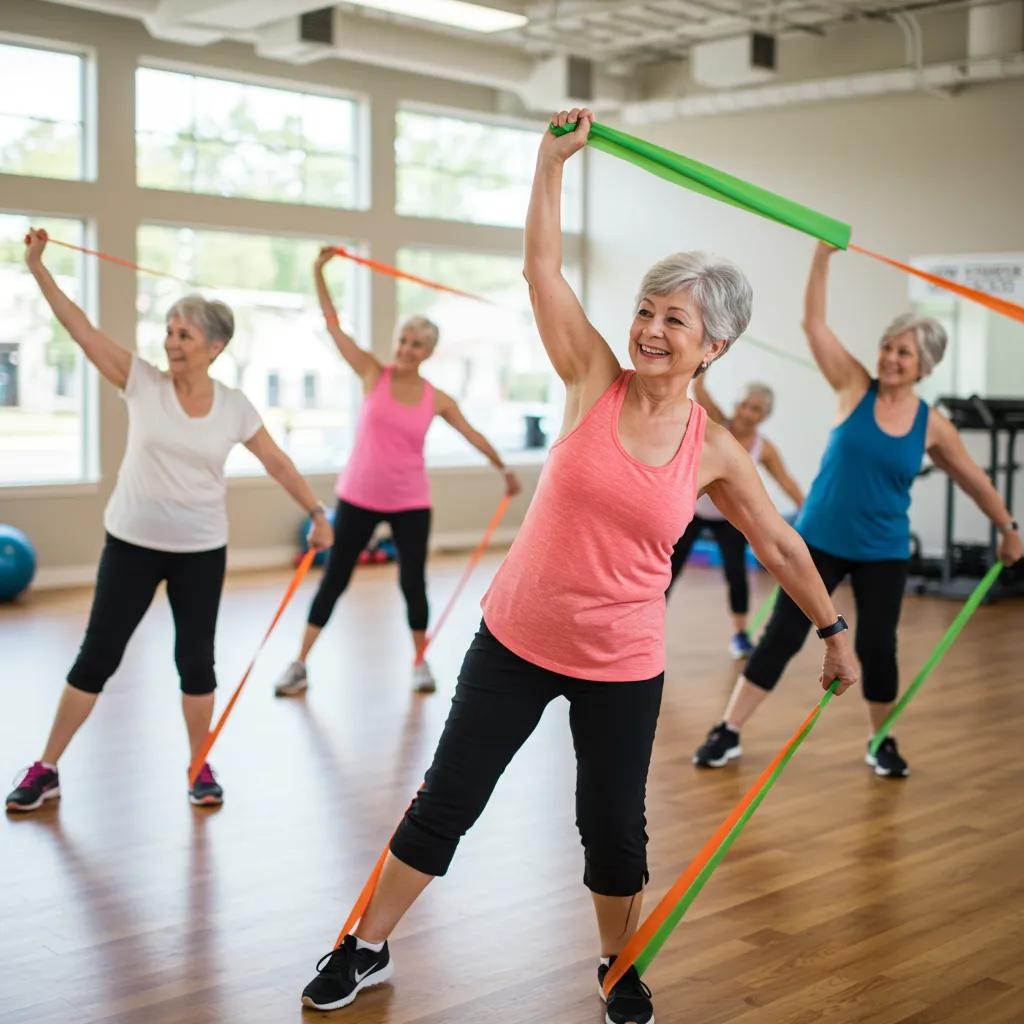
Strength training increases muscle force, supports joint stability, and contributes to bone density, all of which are essential for functional independence. Progressive resistance exercises—such as sit-to-stand progressions, loaded step-ups, and band-resisted hip extensions—translate directly to improved balance, gait, and the ability to manage daily loads safely. Beyond functional improvements, resistance work counteracts age-related sarcopenia and supports long-term metabolic health, improving endurance for household and recreational activities. Trainers commonly scale intensity using bodyweight, bands, or light free weights to match a participant’s baseline while preserving safe movement patterns. These strength gains become most effective when built on a foundation of quality mobility and movement control.
This approach to fitness emphasizes training the body for its natural movements and activities.
Which Stamford Workout Classes Combine Mobility and Strength?
Classes in Stamford that effectively combine mobility and strength blend dynamic movement prep with targeted resistance and balance work to produce practical results. Common formats that integrate both elements include integrated functional classes, Pilates-based strength sessions, small-group functional strength, and corrective-movement workshops that prioritize joint health.
Introductory comparison of class formats available locally and what each emphasizes.
| Class Type | Intensity | Best For |
|---|---|---|
| Integrated Functional Class | Low–Medium | General mobility and practical strength for daily tasks |
| Pilates-Based Strength | Low–Medium | Core control, posture, and flexibility-focused strength |
| Small-Group Functional Strength | Medium | Progressive resistance with individualized cues |
| Corrective Movement Workshop | Low | Movement quality, injury prevention, and mobility deficits |
This table clarifies who benefits most from each format and guides the next steps for choosing a class based on goals and comfort with resistance work.
Before listing specific advantages, consider how group formats compare to one-on-one coaching and how personal training can accelerate progress.
Introductory overview of class types and how to pick based on goals.
- Integrated functional classes are ideal for people wanting balanced mobility and strength in a social format.
- Small-group functional strength sessions suit those seeking progressive overload with close coaching.
- Pilates-based strength classes focus on core and postural control that supports better movement patterns.
These options provide choices for different comfort levels and goals; the next subsection outlines group class benefits in practice.
What Are the Benefits of Group Workout Classes in Stamford?
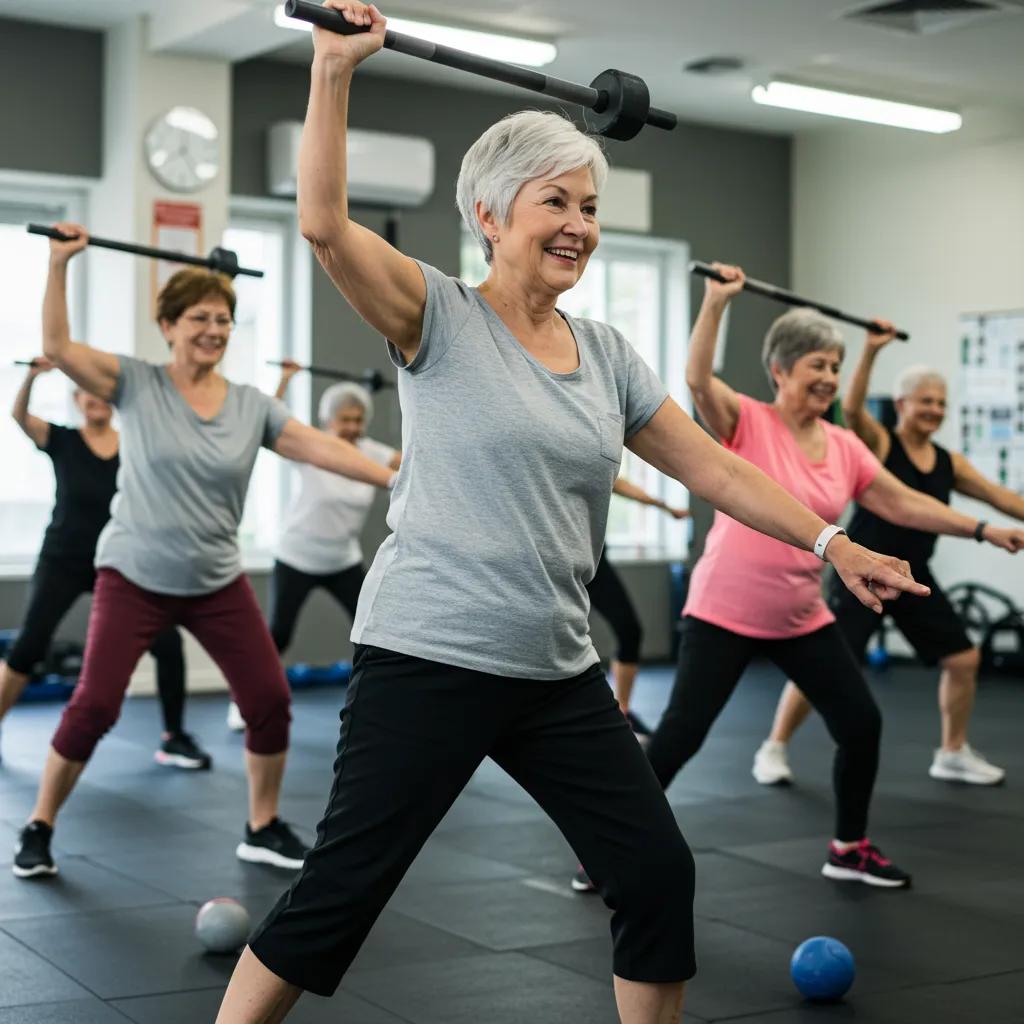
Group classes deliver consistent programming, built-in social support, and efficient use of instructor time while still addressing mobility and strength needs. Participants gain motivation from peers, structured progression across sessions, and exposure to movement variety that improves adherence.
Safety considerations include class size, instructor-to-participant ratio, and available modifications for common joint issues; choosing classes with clear progressions and demonstration of regressions ensures safer advancement. Group settings also reduce cost per session compared with one-on-one training while still providing professional guidance. Understanding these benefits helps decide whether community-based classes or more individualized training best match your goals.
How Does Personal Training Enhance Mobility and Strength Results?
One-on-one personal training begins with an assessment to identify mobility restrictions, strength imbalances, and movement compensations, then creates a customized plan that targets those deficits. Personalized coaching allows precise loading progressions, corrective exercise prescriptions, and close monitoring of form to reduce injury risk and accelerate measurable gains. Trainers can integrate mobility drills directly before strength sets and adjust intensity based on day-to-day readiness, which supports steady progression.
For Stamford residents seeking faster or rehabilitative-focused change, personal training provides targeted pathways from mobility restoration to meaningful strength increases.
Systematic strength training programs are particularly effective for older adults, improving their muscle strength and overall functional performance.
Local Stamford classes and personal training options often include group classes, small-group training, and one-on-one sessions that follow the integrated formats above; consider scheduling a consultation or trial class to identify the right fit for your needs. These locally available formats enable both social engagement and individualized attention without committing to a single long-term approach.
How Do Stamford Fitness Programs Support Older Adults’ Mobility and Strength?
Senior-focused programs in Stamford emphasize low-impact movements, progressive resistance, and balance training to reduce fall risk and preserve independence. Program attributes typically include session length tailored to endurance, smaller class sizes for additional supervision, and exercise selection that addresses common challenges like osteoarthritis or limited range of motion.
The table below summarizes typical senior program attributes alongside expected benefits to make comparisons easy.
| Program Type | Attribute | Benefit |
|---|---|---|
| Low-Impact Strength | Session length: 45–60 min; equipment: bands/weights | Improved lower-body strength and safer joint loading |
| Balance & Fall-Prevention | Small class size; emphasis on proprioception | Reduced fall risk and better reactive stability |
| Active Aging Personal Training | Assessment-driven, progressive scaling | Personalized gains in gait speed and functional tasks |
This table highlights how tailored attributes lead directly to measurable improvements in stability and function for older adults.
Introductory remarks on senior program design and safety.
- Low-impact classes protect joints while building strength through controlled loading and repetition.
- Balance and fall-prevention programs use proprioceptive drills and progressive challenge to reduce accident risk.
- Active aging personal training scales progressions and monitors vitals or pain to keep improvements safe.
These program types form the backbone of senior fitness offerings and guide expectations for measurable improvement.
What Low-Impact Classes Help Seniors Improve Balance and Stability?
Low-impact modalities such as aqua classes, chair-based strength, and gentle functional strength sessions improve balance by enhancing lower-limb strength and proprioception without excessive joint loading. Aqua classes reduce weight-bearing stress while allowing multi-directional movement and resistance, making them useful for arthritis or pain-limited participants. Chair-based and gentle strength sessions use progressive sit-to-stand variations, calf raises, and step drills to target the specific muscles used for standing and walking. Recommended frequency is two to three sessions per week combined with home practice to maintain gains and transfer improvements into daily activities.
These practical class choices directly support safer mobility and increased confidence in movement.
How Does Active Aging Personal Training Cater to Senior Fitness Needs?
Active aging personal training begins with a functional assessment—gait, sit-to-stand, balance tests—to set measurable goals and establish baseline metrics for progress. Programs scale progressive overload carefully, using small increments and monitoring pain, fatigue, and cardiovascular response to ensure safety.
Trainers integrate corrective exercises, balance challenges, and strength sets that align with daily tasks, such as carrying groceries or climbing stairs. Regular reassessments track improvements in objective measures like sit-to-stand time or gait speed, allowing data-driven adjustments.
For those considering a personalized pathway, booking a consultation or trial session in Stamford helps match program intensity to individual health needs and goals.
What Should You Expect in a Stamford Workout Class from Mobility to Strength?
A typical mobility-to-strength class follows a logical structure: an intentional warm-up and mobility priming, targeted strength sets with progressive overload, and a deliberate cool-down that reinforces flexibility and recovery. This flow ensures joints are prepared for loading, movement patterns are reinforced during strength work, and restoration practices help consolidate gains.
Phase-based roadmap showing activities and expected timelines for progression.
| Phase | Typical Activities | Expected Outcome/Timeline |
|---|---|---|
| Phase 1: Mobility Prime (Weeks 1–3) | Dynamic warm-up, joint drills, movement rehearsal | Noticeable ROM gains and reduced stiffness within 2–3 weeks |
| Phase 2: Integrated Strength (Weeks 4–8) | Bodyweight to band resistance, balance drills | Improved functional strength and stability in 4–8 weeks |
| Phase 3: Progressive Overload (Weeks 9–16) | Incremental load increases, compound lifts | Measurable strength gains and endurance by 8–16 weeks |
This phased template shows how consistent attendance and graduated intensity produce predictable mobility and strength improvements over months.
How Is a Typical Class Structured to Progress from Mobility to Strength?
A sample 60-minute class often starts with a 10–15 minute mobility warm-up emphasizing thoracic rotation, hip hinge rehearsal, and ankle mobility to prepare movement patterns. The main block (30–35 minutes) alternates mobility-integrated strength sets—such as band-resisted squats, step-ups, and loaded carries—with balance or corrective interludes to reinforce stability. Sessions finish with a 10-minute cool-down of static stretching and breathing work that promotes recovery and preserves newly gained range. Coaches cue safe progressions and regressions so participants advance intensity only when movement quality is solid, ensuring strength is built on a reliable mobility foundation.
The FUNdamental Integrative Training (FIT) program offers a holistic approach by incorporating various fitness activities to enhance overall physical fitness and encourage regular physical activity.
What Results Can You Expect from Consistent Participation?
With consistent participation—about two to three classes per week—mobility improvements are often noticeable within two to four weeks, while meaningful strength and functional gains typically emerge in six to twelve weeks. Measurable metrics to track progress include sit-to-stand repetitions, timed gait speed, single-leg balance duration, and joint range-of-motion tests; these objective markers help quantify improvements. Continued progression and occasional reassessments prevent plateaus and ensure that training remains aligned with functional goals like easier stair climbing or safer balance. Tracking these metrics provides clear feedback and motivates sustained commitment to mobility-to-strength programming.
Frequently Asked Questions
1. What age group is best suited for mobility and strength training classes in Stamford?
Mobility and strength training classes in Stamford are primarily designed for older adults, typically aged 50 and above. However, younger individuals seeking to improve their functional fitness, joint health, or overall mobility can also benefit. These classes are tailored to accommodate various fitness levels, ensuring that participants can engage safely and effectively, regardless of their age. The focus on low-impact exercises makes them suitable for anyone looking to enhance their physical capabilities.
2. How often should seniors participate in mobility and strength training classes?
For optimal results, seniors should aim to participate in mobility and strength training classes two to three times per week. This frequency allows for consistent practice, which is essential for improving joint health, strength, and overall functional fitness. Additionally, incorporating home exercises on non-class days can further enhance progress. Regular attendance helps build a routine, making it easier to track improvements and maintain motivation over time.
3. Are there any specific health conditions that may prevent participation in these classes?
While many seniors can safely participate in mobility and strength training classes, certain health conditions may require caution. Individuals with severe arthritis, recent surgeries, or uncontrolled chronic conditions should consult a healthcare provider before starting. It’s essential to inform instructors about any existing health issues, as they can provide modifications or alternative exercises to ensure safety and effectiveness during classes. Personalized assessments can help tailor the program to individual needs.
4. What should participants wear to a mobility and strength training class?
Participants should wear comfortable, breathable clothing that allows for a full range of motion. Athletic shoes with good support and grip are essential to prevent slips and provide stability during exercises. It’s also advisable to bring a water bottle to stay hydrated throughout the class. If the class involves equipment, such as resistance bands or weights, participants should check in advance if they need to bring their own or if these will be provided.
5. Can mobility and strength training help with chronic pain management?
Yes, mobility and strength training can significantly aid in chronic pain management, particularly for older adults. These classes focus on improving joint function, enhancing muscle strength, and promoting better movement patterns, which can alleviate pain associated with conditions like arthritis or lower back issues. Regular participation helps build resilience and reduces stiffness, leading to improved overall comfort and quality of life. However, participants should consult with a healthcare professional to tailor the program to their specific pain management needs.
6. How can participants track their progress in mobility and strength training?
Participants can track their progress in mobility and strength training by monitoring specific metrics such as sit-to-stand repetitions, timed gait speed, and joint range-of-motion tests. Many classes also encourage regular reassessments to evaluate improvements and adjust training intensity accordingly. Keeping a fitness journal or using mobile apps can help document workouts, track attendance, and note any changes in strength or mobility, providing motivation and a clear picture of progress over time.
7. Are there any nutritional recommendations to support mobility and strength training?
Yes, nutrition plays a crucial role in supporting mobility and strength training. A balanced diet rich in protein, healthy fats, and complex carbohydrates can enhance muscle recovery and overall performance. Seniors should focus on consuming adequate protein to support muscle repair, along with calcium and vitamin D for bone health. Staying hydrated is also essential, especially during workouts. Consulting with a nutritionist can provide personalized dietary recommendations to complement fitness goals effectively.
Conclusion
Engaging in Stamford’s strength and mobility classes provides essential benefits, such as improved joint health, enhanced functional fitness, and greater independence in daily activities. These programs are tailored to meet the specific needs of older adults, ensuring a safe and supportive environment for personal growth. By committing to regular participation, you can achieve measurable improvements in both mobility and strength, paving the way for a more active lifestyle. Explore our class offerings today and take the first step towards a healthier, more vibrant life.