
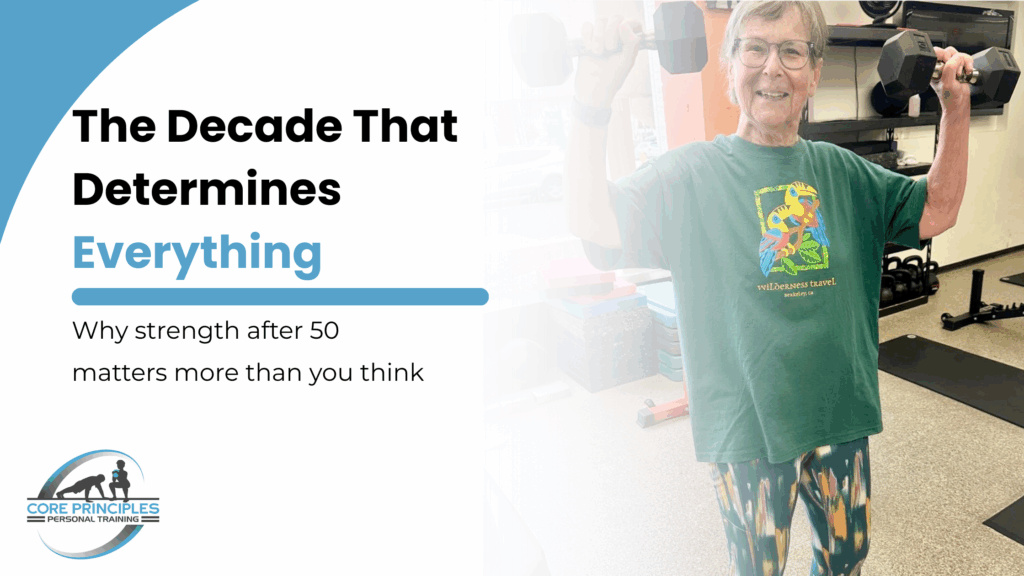
The “Marginal Decade” in Stamford: Why Strength After 50 Matters More Than You Think
If you’re over 50, you’ve probably had this thought—quietly, maybe while carrying groceries or getting up from the floor:
“I can still do this… but it feels different than it used to.”
Not painful.
Not alarming.
Just different.
Most people brush that moment off. Life is busy. Work, family, weather, schedules. Movement slowly becomes optional. And strength—without anyone realizing it—starts to fade into the background.
Here’s the important part:
That doesn’t mean you’re broken.
It doesn’t mean you’re “getting old overnight.”
It means your body is responding exactly as bodies do when they’re not given a reason to stay strong.
What Is the “Marginal Decade”?
In a recent interview that’s been getting a lot of attention, longevity expert Dr. Peter Attia talks about something called the Marginal Decade.
It’s the final 10 years of your life.
Not defined by age on a calendar—but by what your body can do.
Can you:
- Get up from the floor without assistance?
- Carry your luggage while traveling?
- Walk confidently without worrying about balance?
- Say yes to plans without mentally calculating the physical cost?
These aren’t extreme goals. They’re ordinary moments.
And that’s exactly why they matter so much.
The Real Predictor of Independence Isn’t What You Think
Many people assume aging well comes down to genetics, luck, or eating the “right” foods.
Those things help—but they’re not the main driver.
What matters most, according to decades of research and what we’ve seen firsthand at Core Principles, is strength.
Muscle is your reserve.
It’s your buffer.
It’s what allows you to adapt when life throws you uneven terrain—literally and figuratively.
Without it, even small tasks begin to feel risky.
With it, life stays open.
Why Strength Training After 50 Is Different (and Should Be)
This is where people often get stuck.
They hear “strength training” and picture:
- Loud gyms
- Fast-paced classes
- Movements that feel intimidating or unsafe
So they do nothing instead.
But effective strength training after 50 looks very different.
At Core Principles here in Stamford, we’ve worked with hundreds of adults who had never lifted weights—or hadn’t in decades. Many came in worried about their knees, their back, or “doing something wrong.”
What they discover is this:
Strength is built slowly, intentionally, and safely.
It’s not about pushing harder.
It’s about practicing the basics well.
Standing up.
Carrying weight.
Balancing.
Reaching.
Moving through a full range of motion with control.
These are the movements that protect independence later—and they’re all trainable.
You Don’t Need Motivation—You Need Structure
One of the biggest myths we see is that people think they’re inconsistent because they lack discipline.
That’s rarely true.
Most people stop because:
- They don’t know what’s safe
- They’re unsure if they’re doing it right
- They don’t see progress quickly enough to feel confident
With the right guidance, consistency becomes easier—not harder.
Two focused sessions a week.
Clear instruction.
A calm environment.
Progress that makes sense.
That’s how strength sticks.
Why This Matters Here in Stamford
Whether it’s walking Cove Island, traveling through Bradley Airport, navigating winter sidewalks, or simply keeping up with grandchildren, Stamford life asks something of your body.
Strength is what lets you meet those moments without hesitation.
And the good news?
You’re not late.
You haven’t missed your window.
You’re right on time.
A Gentle Question to Consider
If you imagine yourself 10, 15, or 20 years from now—
What do you want your body to allow you to do?
That answer doesn’t require pressure.
It just requires a plan.
If you’re curious about what a sustainable, supportive approach to strength training after 50 could look like, we’re always happy to talk things through—no hype, no judgment.
Because feeling better in your body doesn’t just change how you move.
It changes how you live.