
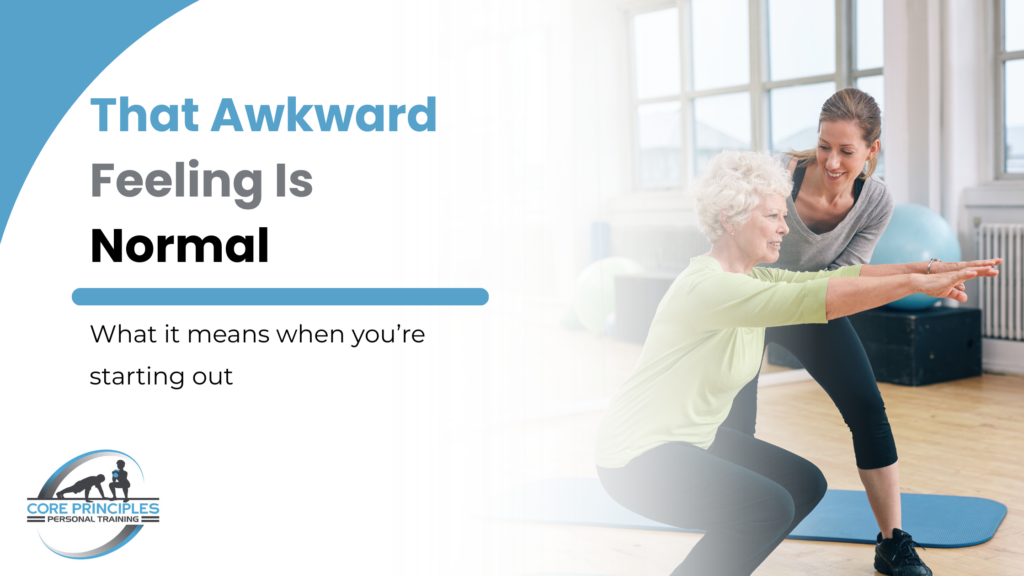
Many adults over 50 have the same quiet thought after trying a new exercise for the first time:
“That felt awkward… maybe this just isn’t for me.”
Maybe the movement felt unfamiliar.
Maybe the timing was off.
Maybe your arms and legs didn’t quite do what you expected.
It’s a very common moment — especially for adults starting strength training later in life.
And here’s the surprising truth: feeling a little awkward at the beginning is often a very good sign.
For many adults in Stamford who want to stay strong and independent, the goal of exercise isn’t competition or pushing limits. It’s maintaining the ability to do everyday things confidently — climbing stairs, carrying groceries, enjoying walks along Cove Island, or keeping up with grandchildren.
Understanding why those first movements can feel clumsy can actually replace hesitation with confidence.
Why Do New Movements Feel Awkward at First?
When you try a movement your body hasn’t practiced recently, your brain is essentially learning a new pattern.
Think of it like driving a different car for the first time.
The steering might feel different. The brakes respond a little differently. Nothing is wrong — it’s simply unfamiliar.
Exercise works the same way.
Your brain and muscles are learning to coordinate again. That process is often called motor learning, and research shows that repetition and practice gradually make movements feel smoother and more natural.
At the beginning, your body is simply collecting information:
- How far should I bend?
- Where should my weight go?
- Which muscles should help?
That temporary awkwardness is the body’s way of figuring things out.
Why This Matters More After 50
As we move through our 50s, 60s, and beyond, many people become more cautious about movement.
Not because they’re incapable — but because they want to avoid making something worse.
You may hear thoughts like:
“My knee isn’t perfect.”
“My balance isn’t what it used to be.”
“I don’t want to strain something.”
Those concerns are understandable.
But avoiding movement entirely often makes everyday activities feel harder over time. Strength and coordination tend to improve when they are practiced consistently — even with small, gentle efforts.
According to the National Institute on Aging, regular strength and balance exercises can help older adults maintain mobility and independence as they age.
The key is progressing gradually, not perfectly.
And that begins with learning movements — even if they feel unfamiliar at first.
What Usually Happens After a Few Sessions?
One of the most reassuring things many beginners notice is how quickly the awkwardness fades.
The first session often feels like learning the alphabet.
By the second or third session, those movements begin to feel recognizable.
Your body starts remembering:
- Where your feet go
- How to hold the weights
- When to breathe
- How far to move comfortably
This familiarity builds confidence.
Not because you suddenly become “athletic,” but because things start feeling predictable.
Many adults who begin exercising later in life say the same thing after a few weeks:
“I thought it would feel harder than this.”
That shift happens because repetition builds comfort.
How to Make the Beginning Feel Easier
If you’re starting exercise after 50, a few simple approaches can make the process much more comfortable.
Move Slowly
Speed isn’t important at the beginning. Slower movements allow your body to understand the pattern.
Focus on Consistency
Progress usually comes from repeating movements over time, not from doing them perfectly the first day.
Adjust the Exercise to Fit You
Good programs modify exercises based on comfort levels. Small adjustments in height, depth, or support can make a big difference.
Ask Questions
If something feels confusing, asking a simple question can clarify the movement immediately.
The goal isn’t intensity — it’s familiarity.
Reassurance: Feeling Awkward Is Completely Normal
If your first few sessions feel slightly unfamiliar, you’re in good company.
Many adults starting strength training share similar thoughts:
“I feel a little clumsy.”
“I’m not sure if I’m doing this right.”
“Everyone else probably knows what they’re doing.”
But the reality is that every single person who learns a new movement starts exactly the same way.
Awkwardness isn’t a sign you’re doing something wrong.
It’s a sign you’re learning something new.
And learning is exactly how strength begins.
A Small Step Toward Confidence
For many adults in Stamford, the hardest part of exercise isn’t the movement itself.
It’s simply starting.
Once you take that first step — even if it feels a little unfamiliar — your body begins adapting faster than you might expect.
Movements become smoother.
Confidence grows quietly.
Everyday activities start to feel easier again.
If you’ve been considering starting but feel unsure, that feeling is more common than you might think.
And often, the awkward beginning is simply the first sign that your body is waking back up to movement.
If you’ve been thinking about starting but still feel unsure, that’s very common. Many adults here in Stamford felt the same way before their first visit. If you have questions about getting started, feel free to reach out to our team at Core Principles Personal Training. We’re always happy to help.